
“I have often made the hypothesis that ultimately physics will not require a mathematical statement, that in the end the machinery will be revealed and the laws will turn out to be simple.”
Richard Feynman, The Character of Physical Law (1965)
Time and motion are inseparable, from the sun to a stopwatch we measure time by motion. Extending the concept of universal motion into the time dimension suggests that matter has motion, in all four dimensions x,y,z,t and this motion is not linear. We measure time by motion; a pendulum, a spring, atomic motion. The passage of time is observed by comparison with a periodic motion. Our earliest units of time, years, months (moons) and days were based on cycles of the earth and moon. A year was a year and a day had a set length before we knew the true nature of these cycles.
Einstein’s General Relativity gave us Spacetime, where space and time are considered together. We need to fully imagine the concept and give the dimension of time all the same characteristics and privileges afforded the other dimensions. We need to think in terms of X, Y, Z and T and recognize that time is a direction, just like x, y and z.
Relatively gives us: speed through time depends on speed in the other directions.
There is a geometric relationship here and as speed increases, time slows down, length or dimension and mass both increase. As you approach C, time goes to 0
You could say we are moving in the direction of time with a given speed. Although most people would have trouble imagining a fourth physical dimension, most would agree that time seems to have a definite direction and speed. Physical laws are symmetrical with respect to time and mathematically work equally well for time in the positive direction or time in the negative direction. If we consider the direction we are moving in time as positive then we realize it would be as difficult to go back in time as it would be to go back to a previous X,Y or Z.
.Any dimension beyond our familiar three is hard to imagine*, but common in physics. Current String Theory requires 10 or 20 dimensions for the math to work. Imagining beyond three dimensions is a challenge because we can’t see or sense it directly. In a similar way our ancestors couldn’t imagine the Earth being round because they couldn’t see or sense the dimensions involved.
Time and motion are inseparable, from the sun to a stopwatch we measure time by motion. Extending the concept of universal motion into the time dimension suggests that matter has motion in all four dimensions (x,y,z,t) and this motion is not linear.
*To help imagine going from 3 dimensions to 4 you can use as a model, what we know about going from 2 to 3. For example, we can say that he direction of time is it right angles to the other three dimensions x y and z, in the same way that z is at right angles to x and y etc.
In his 1884 book Flatland: a Romance of Many Dimensions, Edwin Abbott fully envisions a 2-dimensional society. 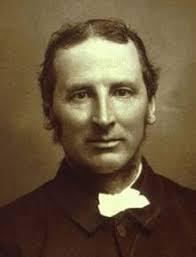 Though more about politics and religion he does successfully describe how a 2-dimensional observer would perceive a 3-dimensional shape and later how a 4-dimensional object would appear.
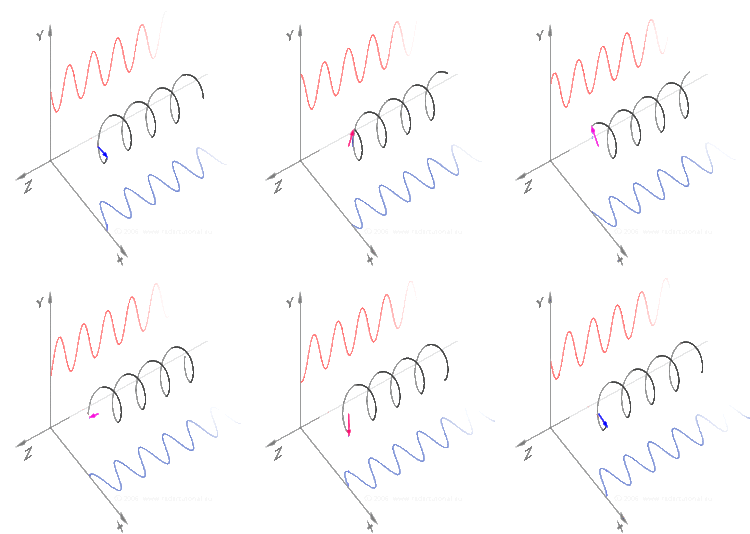
Three dimensions can be represented on two with pencil and paper. If you add a motion, showing a change over time (gif, movie) you have a four dimensional representation in two dimensions.
 Towards Unification